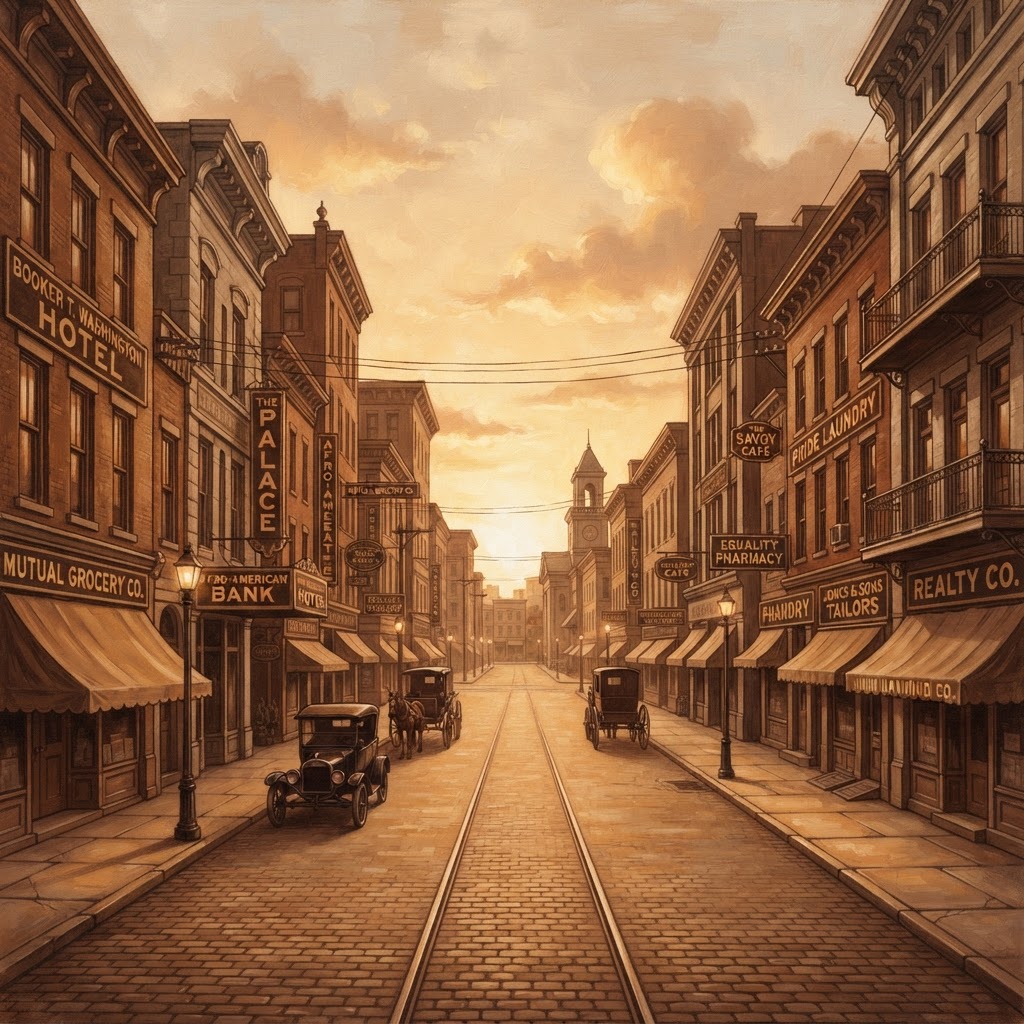
The Original Black Wall Street
Before we rebuild, we must remember what was built — and what was taken.
They Built Something From Nothing
After emancipation, Black Americans — many of them formerly enslaved — built thriving communities across the country. With little more than determination and cooperation, they created centers of commerce, culture, and wealth that rivaled any in America.
These communities became known as "Black Wall Street" — a name that belonged not to one neighborhood, but to a network of communities: Greenwood in Tulsa, Jackson Ward in Richmond, Parrish Street in Durham, Sweet Auburn in Atlanta, and many more.
They built banks. Insurance companies. Hotels. Theaters. Newspapers. Hospitals. Schools. They owned their land, their businesses, and their institutions. And they circulated dollars within their communities — every dollar passed from hand to hand many times before it left, creating a prosperity that lifted entire neighborhoods.
These are the people whose shoulders we stand on.
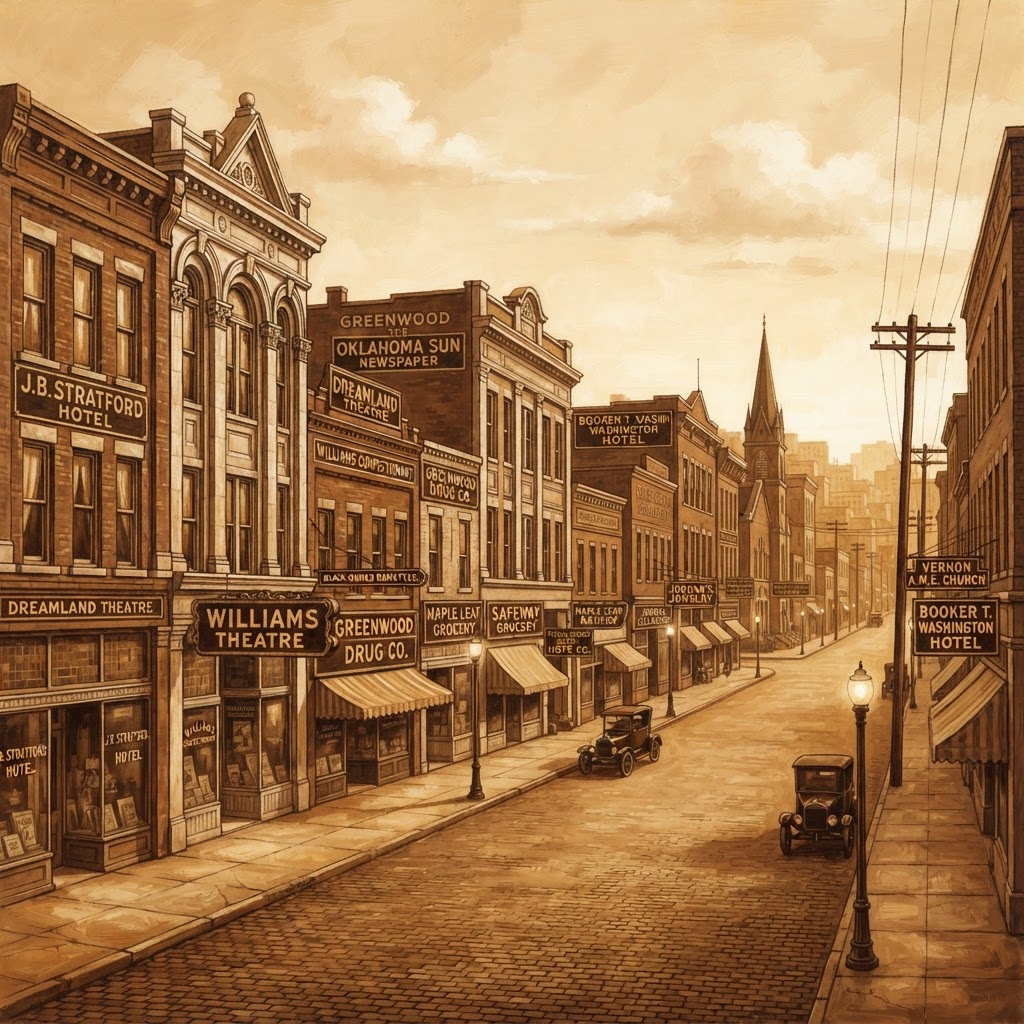
Tulsa, Oklahoma
Greenwood District
The Most Famous Black Wall Street
Established in 1906, Greenwood grew into 35 square blocks of Black-owned businesses — 15 churches, 2 theaters, 2 schools, a hospital, a library, and over 600 businesses. It was a city within a city, self-sufficient and prosperous, until it was burned to the ground in 1921.
O.W. Gurley
Established the Greenwood district in 1906, laying the foundation for one of America's most prosperous Black communities.
J.B. Stradford
Lawyer and entrepreneur who built the Stradford Hotel — the largest Black-owned hotel in the country.
A.J. Smitherman
Publisher of the Tulsa Star, a Black newspaper that advocated for the community.
Dr. A.C. Jackson
Physician described by the Mayo Clinic as "the most able Negro surgeon in America."
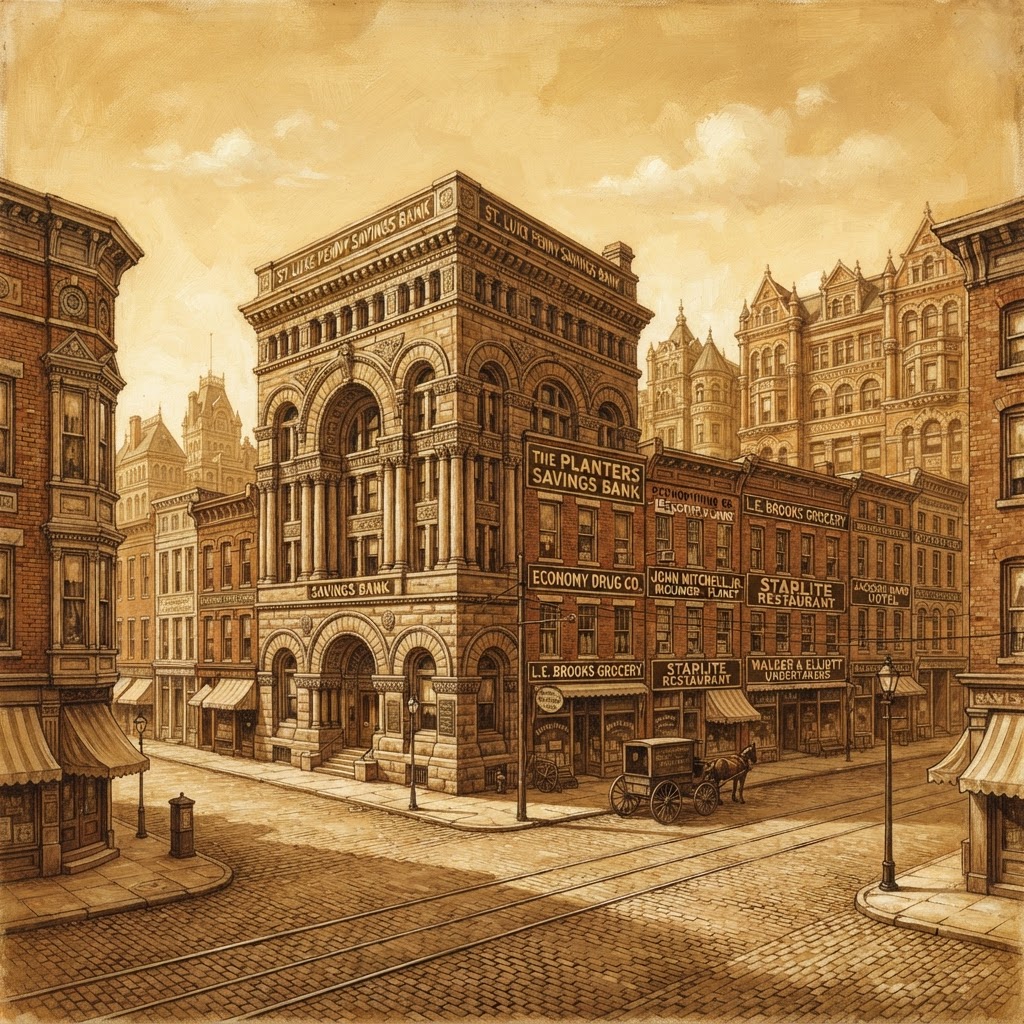
Richmond, Virginia
Jackson Ward
The Harlem of the South
Known as the "Harlem of the South," Jackson Ward was a center of Black finance, culture, and entertainment. It was home to the first bank chartered by a Black woman in the United States — a landmark of Black economic independence.
Maggie L. Walker
The first Black woman to charter a bank in the United States — St. Luke Penny Savings Bank, 1903.
John Mitchell Jr.
Editor of the Richmond Planet, banker, and civil rights leader who fought against lynching and for Black economic independence.
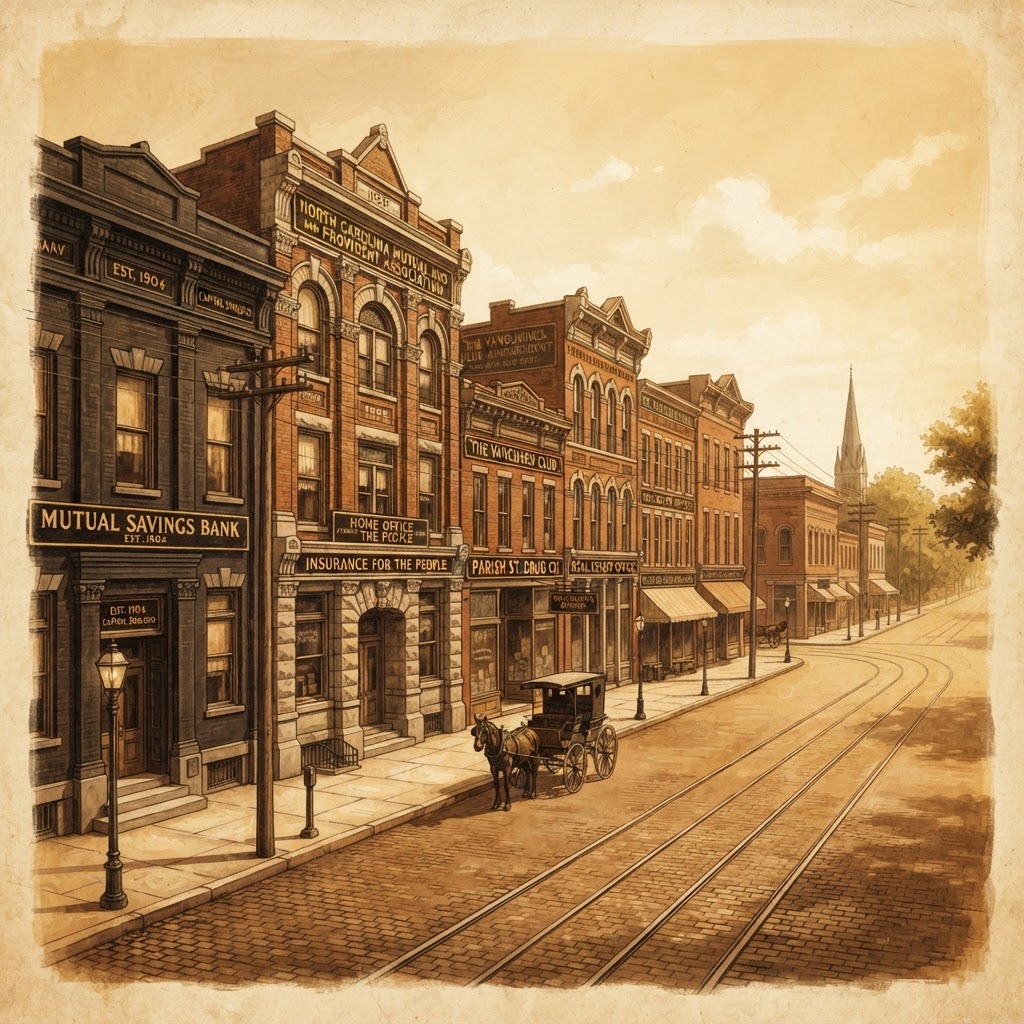
North Carolina
Durham
The Capital of the Black Middle Class
Durham's Parrish Street was known as "Black Wall Street." It was home to the largest Black-owned business in the world and a Black-owned bank that financed the community's homes, businesses, and dreams.
John Merrick
Co-founded North Carolina Mutual Life Insurance Company in 1898 — one of the largest Black-owned businesses in the world.
C.C. Spaulding
President of North Carolina Mutual, who led the company to national prominence and mentored a generation of Black entrepreneurs.
Mechanics & Farmers Bank
Founded in 1907, a Black-owned bank that financed homes, businesses, and dreams in Durham's Parrish Street district.
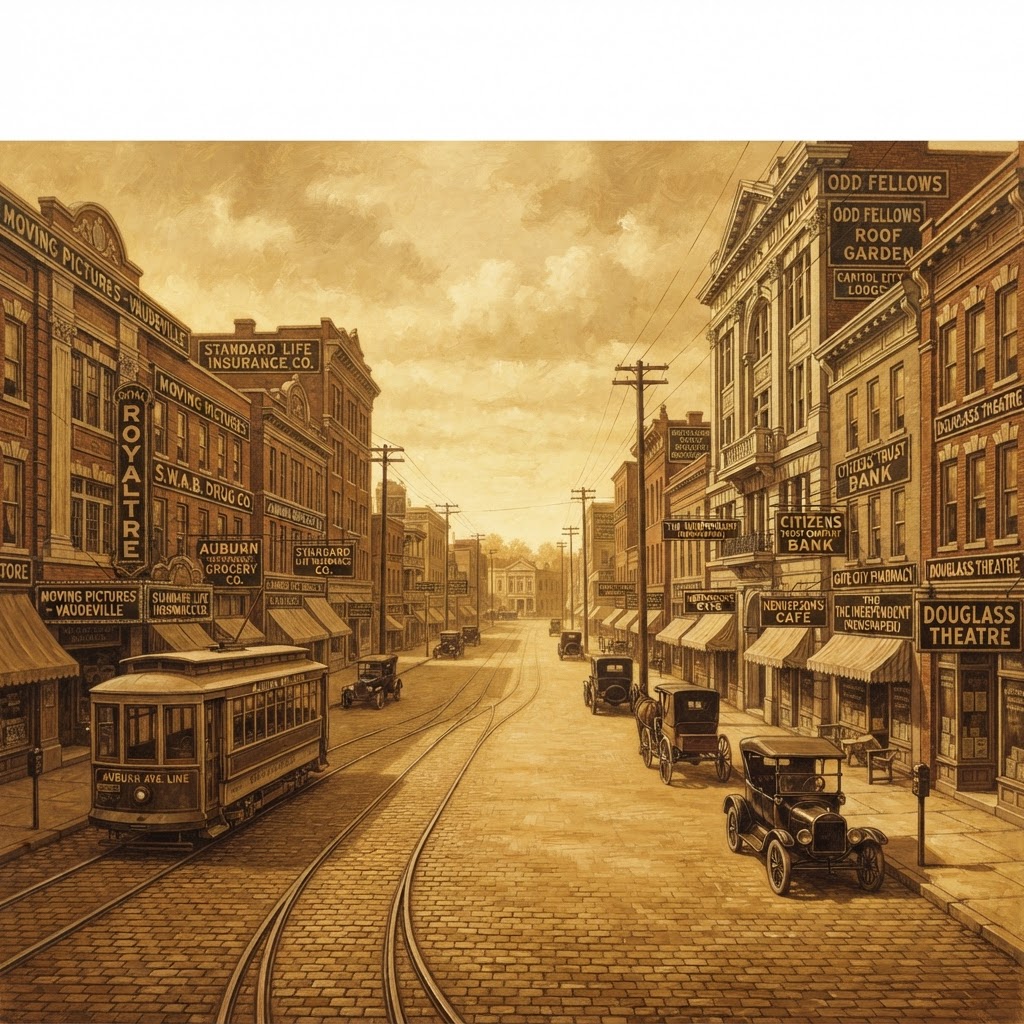
Atlanta, Georgia
Sweet Auburn
The Richest Negro Street in the World
Auburn Avenue was once called "the richest Negro street in the world." It was a vibrant commercial corridor of Black-owned businesses, theaters, and institutions — and the birthplace of Dr. Martin Luther King Jr.
Alonzo Herndon
Born enslaved, he became Atlanta's first Black millionaire and founded Atlanta Life Insurance Company — a pillar of the Auburn Avenue corridor.
What Happened to Them
In 1921, a white mob attacked Greenwood in Tulsa. Over two days, 35 blocks were burned to the ground. An estimated 300 people were killed. 10,000 were left homeless. The prosperity that took 15 years to build was destroyed in less than 48 hours.
Greenwood was not alone. Across America, Black Wall Streets were dismantled — not just by violence, but by policy. In the 1950s and 60s, federal highways were built directly through Jackson Ward, Sweet Auburn, and other thriving Black communities. Urban renewal bulldozed Black business districts nationwide. Redlining and discriminatory lending prevented rebuilding.
The wealth was destroyed. The land was taken. The stories were buried.
Why Their Story Is Our Blueprint
These communities proved something that the world tried to make us forget: that when a people own their assets, circulate their capital, and build their institutions, prosperity follows.
They were not anomalies. They were evidence. Evidence that Black wealth is not a dream — it is a blueprint. A blueprint that was burned, bulldozed, and buried, but never destroyed.
We are not starting from scratch. We are continuing what they started. Every trust we build, every business we launch, every dollar we circulate within our community is a continuation of their work.
They built Black Wall Street once. We are building it again.
We're Rebuilding Black Wall Street
One family. One business. One community at a time.
I'm Ready to Build